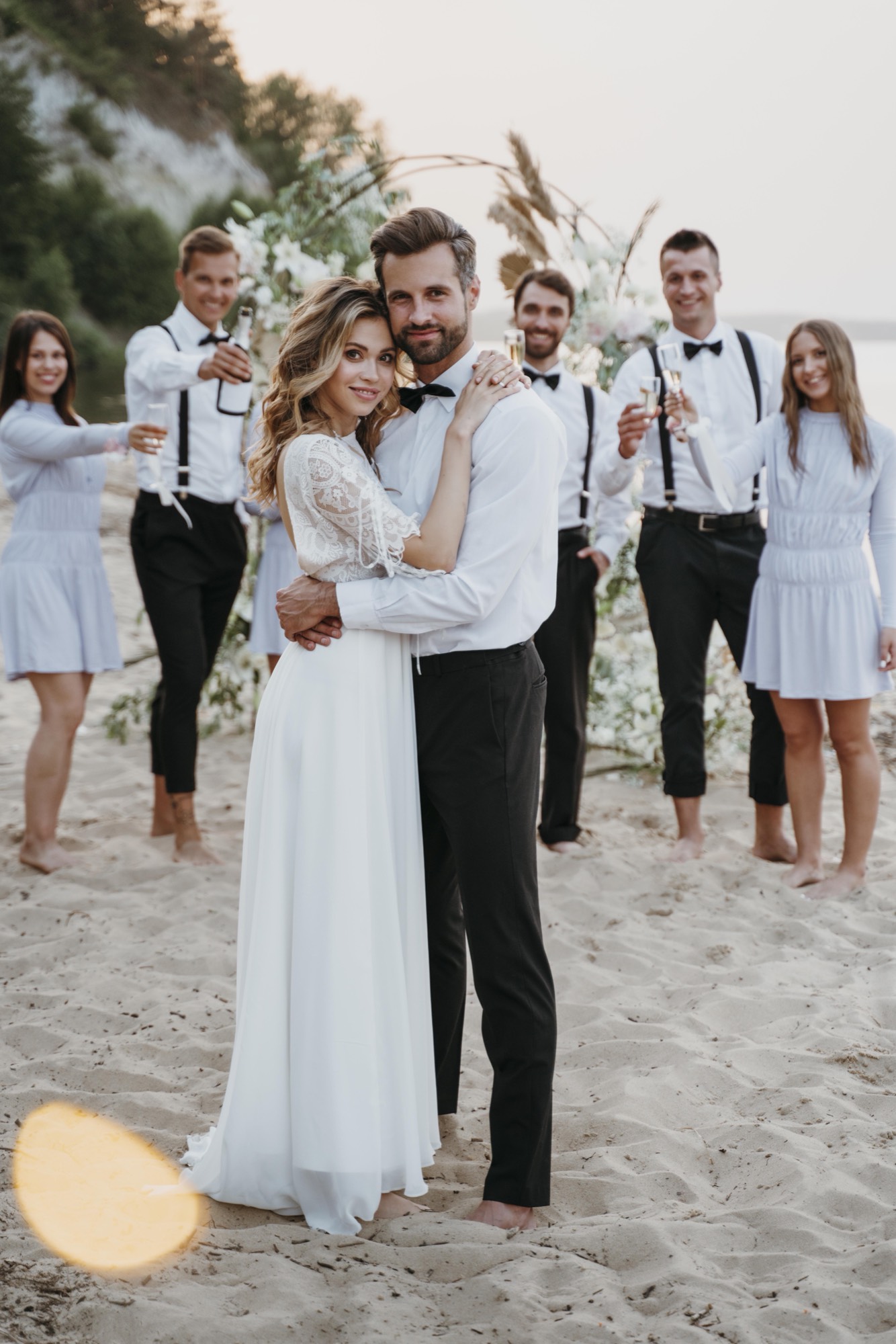
The couple getting married in Cabo starts planning twelve to eighteen months ahead. They live in the United States or Canada, they do not know anyone here, and all of their trust is built through a screen. They will search in English, save photos, read reviews and write to three or four planners. Your marketing job is simple to state and hard to execute: be one of those three or four.
Selling a destination wedding is selling certainty
No wedding vendor sells a service: they sell the calm of knowing the most important day will not fall apart in a country the couple does not know. All of your marketing should push toward that feeling.
That changes what you publish. A catalog of packages does not build trust. What does: complete real weddings with their story, testimonials with a name and a face, clear answers on permits and legal requirements, and transparency in how you quote.
Wedding SEO is played in English
Your clients are not searching "wedding planner Los Cabos" in Spanish. They search "Cabo wedding planner", "destination wedding Cabo San Lucas", "beach wedding venues Cabo". If your site only exists in Spanish, you are competing for a sliver of the market.
And they search much more than that: long, specific questions — how the paperwork works, how many days early to arrive, what happens if it rains, which season is best, what it costs in broad terms. Each of those questions is a page you can write, rank, and that works for you for years. It is the kind of content AI search engines also cite when a couple asks how to get married in Cabo.
Photos sell, but the site has to carry them
Weddings are a visual sector, and that is the trap: planner sites are often beautiful and painfully slow. Huge unoptimized galleries that take six seconds to load on a phone in Denver. That wait costs clients you will never know you lost.
A well-built wedding site loads fast with the same photos, works flawlessly on mobile, has short forms — nobody fills a twenty-field questionnaire to ask for information — and replies fast.
With Cabo Wedding Services we worked exactly that combination: English content for the US market and a technical base that holds it up.
Instagram brings inspiration; Google brings contracts
Social media is the portfolio and the first emotional contact, and it is indispensable in this sector. But the decision to hire almost always goes through a search: the couple found you on Instagram, then searched your name on Google to confirm you exist, that you have reviews and that your site looks serious.
Working only social leaves half the funnel unbuilt.
Frequently asked questions
What should my wedding site have first?
A well-written English version, mobile speed, real weddings published with their story, and a simple contact form with a fast reply. With that you are already ahead of most.
How long until it works?
Wedding content has an advantage: it ages very well. An article that explains the requirements to get married in Mexico can bring couples for years. But it is planted months ahead, and your clients' decision cycle is long.
Is a blog worth it, or is it a waste of time?
In destination weddings it is some of the work that performs best, as long as you answer real questions instead of writing for the sake of writing. Every question your clients ask you by email is an article waiting to exist.
Do I need paid ads?
They help fill specific seasons and compete for very disputed searches. But in this sector trust — reviews, content, real weddings — pays more over the long term than an ad budget.
Is your site ready for the season ahead? Start with a free SEO audit.